

As women’s rugby continues its rapid rise in popularity across the UK and beyond, new fans are increasingly asking a simple question: what’s the difference between Women’s Rugby Union and Women’s Rugby League?
While both formats share the same roots and fundamental objective – carrying, passing and kicking the ball to score tries—they offer distinctly different styles of play.
A Game of Two Codes
At first glance, the two versions look similar. But the key differences lie in how the game flows, how possession is contested, and how teams build attacks.
Women’s Rugby Union, played with 15 athletes per side, is often described as the more tactical of the two. Matches feature continuous contests for possession, with players battling for the ball after tackles in what are known as “rucks.”
By contrast, Women’s Rugby League fields 13 players per team and is built around speed and structure. Each side is given six tackles to advance the ball before possession is handed over, creating a more predictable rhythm that many newcomers find easier to follow.
Same Clock, Different Tempo
Despite their differences, both formats share the same match length: 80 minutes, split into two halves.
However, the pace of play varies significantly.
Union’s frequent stoppages – scrums, lineouts and breakdowns – create a more strategic, territory-focused contest. League, with fewer interruptions and simpler restarts, delivers a faster, more continuous spectacle.
What Happens After a Tackle?
This is where the divergence becomes most obvious.
In Union, play slows momentarily as players from both teams compete for the ball on the ground. This physical contest is central to the game but can be complex for new viewers.
In League, there is no such contest. The tackled player quickly regains their feet and rolls the ball backwards to a teammate, allowing play to resume almost immediately.
Set Pieces and Structure
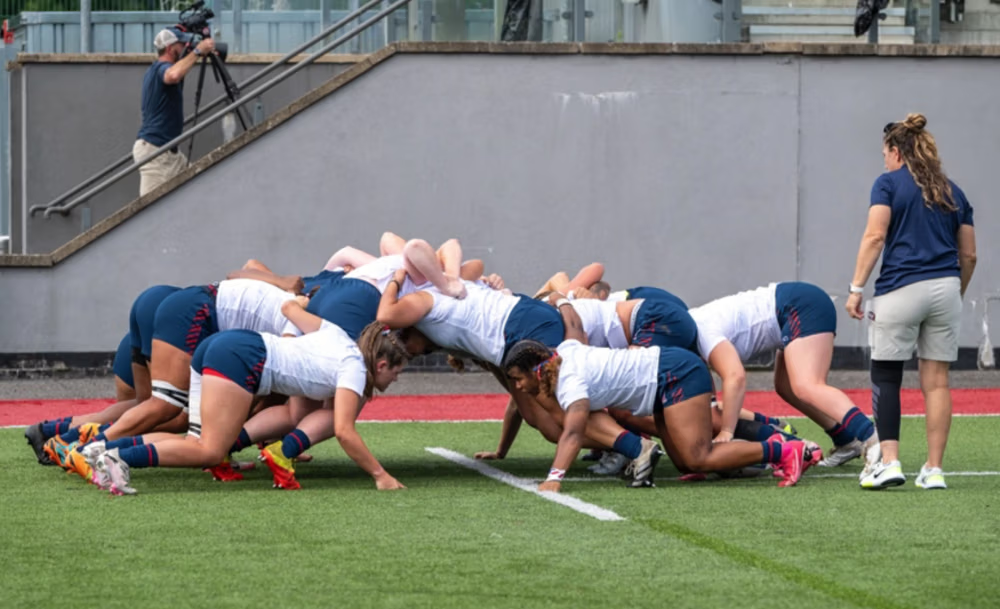
Union features a variety of structured restarts, including contested scrums and lineouts, both of which play a crucial role in tactics and possession.
League retains scrums, but they are less competitive and have minimal impact on the outcome of the game. Lineouts, a staple of Union, do not feature in League at all.
Growing Audiences and Global Stages
The women’s game in both codes is expanding rapidly, with increased investment, media coverage and participation at grassroots level.
On the global stage, competitions such as the Women’s Rugby World Cup have drawn record audiences, highlighting the growing appeal of Women’s Rugby Union. Meanwhile, Women’s Rugby League continues to strengthen its presence, particularly in England and Australia, with domestic leagues and international fixtures gaining traction.
A Simple Distinction
For those new to the sport, the difference can be summed up succinctly:
- Union is a contest for possession at every stage
- League is about making the most of a limited set of tackles
Both offer compelling, high-impact sport – and as the women’s game continues to grow, audiences are discovering there’s more than one way to play rugby.