

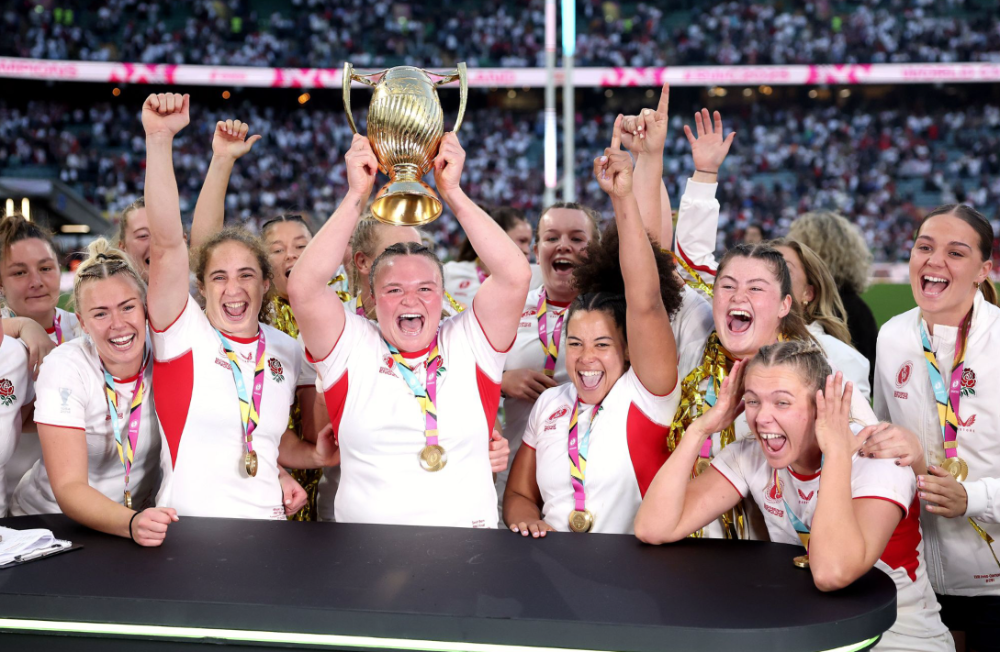
Women’s rugby union has transformed dramatically in the past decade. Record crowds, broadcast deals, and international rivalries have lifted the profile of the sport in England, New Zealand, and the United States. Nowhere has that rise been clearer than in the dominance of England’s national team, the England women’s national rugby union team, over the past ten years.
Yet, while the women’s game is accelerating on the field and commercially, salaries still reveal a significant gap – not only between women and men, but also between the leading women’s nations themselves.
England: Professional Structure, Modest Pay
The Red Roses are now on full-time central contracts with the Rugby Football Union (RFU). Current England women’s salaries are roughly:
- £32,000–£50,000 per year (base salary)
- Additional match fees and performance bonuses during Six Nations and World Cup cycles
At domestic level, Premiership Women’s Rugby operates under a team salary cap of ~£190,000, meaning club earnings remain modest.
In contrast, England men’s internationals earn far more:
- Central contracts: £150,000+
- Match fees: £20,000–£25,000 per Test
- Premiership men’s salaries: £250,000–£400,000 average, with elite stars exceeding £1 million annually
New Zealand: Black Ferns Leading Performance, Higher Pay
The New Zealand women’s national rugby union team dominate the Women’s Rugby World Cup historically. Their tiered national contracts are approximately:
- NZ$60,000–NZ$130,000 (~£30,000–£67,000) depending on experience and performance tier
New Zealand men’s All Blacks earn £300,000–£600,000+, with top players exceeding £1 million.
United States: Emerging Professional Model
The United States women’s national rugby union team introduced centralised contracts recently, mainly covering major tournament periods. Salaries remain below England and New Zealand levels.
Domestic Women’s Elite Rugby marks a step toward professionalisation, but full-time year-round income is still developing.
The Bigger Picture: Proven Success Versus Pay
The Red Roses’ competitive pedigree is clear. They have won the Women’s Rugby World Cup twice (1994 and 2014) and finished runners-up five times. Over the past decade:
- Multiple Six Nations titles, including Grand Slams
- Record unbeaten runs
- Sell-out crowds at Twickenham
- Expanded broadcast audiences
Meanwhile, New Zealand’s Black Ferns have 6 World Cup titles and remain a dominant force, while the USA Eagles were inaugural 1991 champions.
🏆 Women’s Rugby World Cup Winners (1991–2022)
| Year | Winner | Runner-Up |
| 1991 | 🇺🇸 USA | 🏴 England |
| 1994 | 🏴 England | 🇳🇿 New Zealand |
| 1998 | 🇳🇿 New Zealand | 🏴 England |
| 2002 | 🇳🇿 New Zealand | 🏴 England |
| 2006 | 🇳🇿 New Zealand | 🏴 England |
| 2010 | 🇳🇿 New Zealand | 🏴 England |
| 2014 | 🏴 England | 🇳🇿 New Zealand |
| 2017 | 🇳🇿 New Zealand | 🏴 England |
| 2022 | 🇳🇿 New Zealand | 🏴 England |
Titles by Nation:
- New Zealand Black Ferns – 6 titles
- England Red Roses – 2 titles
- USA Eagles – 1 title
Despite this sustained excellence, salaries for women’s rugby players remain a fraction of men’s earnings in all three countries. Performance has been proven; investment scale has not.
Looking Ahead: Closing the Gap
While the women’s game continues to grow in prestige, fan engagement, and sponsorship interest, pay equity is still a work in progress. The financial divide persists even as England and New Zealand players consistently contest World Cups and deliver top-level international performance.
The past decade has proven the global appeal and success of women’s rugby. The next decade must see financial structures catch up with competitive excellence to match the visibility and achievement these athletes have earned on the world stage.
Copyright: WomensRugbyUnion.com